People2 min read
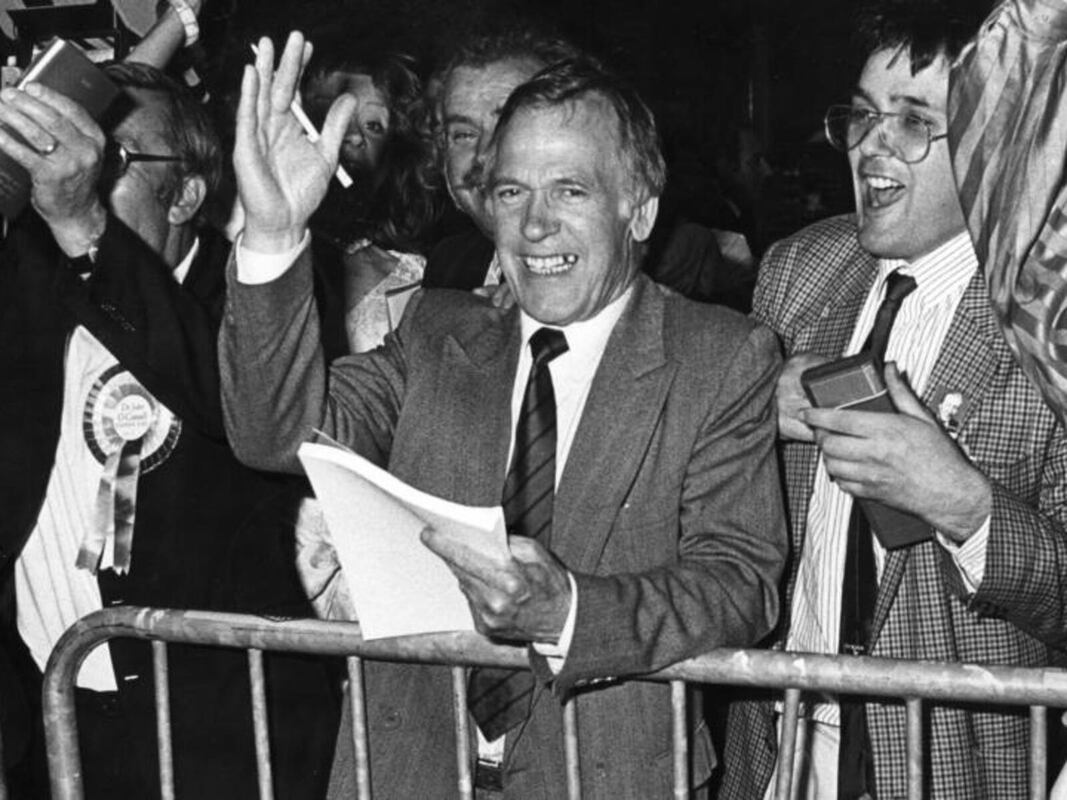
Dr. John O'Connell
The Doctor, Politician & Joyce Road resident remembers · Shared by 'Doctor John: Crusading Doctor & Politician'
In 1929, 11 Joyce Road was first leased to John F ConnellFormer Labour Party and Fianna Fail TD Dr. John O'Connell started in off in number 73 Aungier Street in a ''two pair back'' - two rooms at the back of a tenement house. When he was still a toddler his family moved to become the first occupants of number 11 Joyce Road, Drumcondra, a two bedroomed corner house in what he recalls as
'a singularly happy neighbourhood.'
At that time there were six children sharing one bedroom. Dr O'Connell recalls that 'Like many of my generation in Dublin, I was brought up in an atmosphere of strict discipline, of all-pervasive authority, unquestioned and infallible... You were expected to ask permission before you went out. You were expected not to stray too far. Expected to report on time for family rosary, to do your tasks. Expected not to break or damage things. Expected, most of all, to understand the sacrifices being made by your parents in order to keep the family afloat..'
In his book 'Doctor John: Crusading Doctor & Politician' Dr. O'Connell recalls that for many families in the area at the time, 'money was the major problem. In 1939, for example, we had about £2 and 8 shillings a week to cover everything... We coped by various means. There was the half-hour trudge from Drumcondra down to Kennedy's bakery in Parnell Street for broken loaves, which came a lot cheaper than ordinary loaves... There were visits to Rourke's bakery for four-day old bread, collected in a pillow case..
Once or twice, items slipped past my father's ''no charity'' rule, and I remember once having a pair of girl's shoes with slightly higher than normal heels. Today, they'd be fashionable.' He continues, 'mother was somewhat erratic in her choice of colours for patches, and would happily sew a green patch on brown trousers.'
Dr. O'Connell recalls the routine of ordinary life, 'Fasting twice a week and commonly wearing a hair shirt, it was my father who orchestrated our religous life, who made sure we were up early in the morning to go to Mass and home in time for the family rosary.'
A day on Joyce Road 'began early - at half past six. Somebody went for a penn'orth of milk from the milkman who toured the neighbourhood with his big cans of milk using a horse and dray. Milk - and porridge. The table was a drop-leaf piece of wood over the bath in the kitchen, common to many Dublin houses of the time... we were always hungry, and that we saw some foods - like meat - so rarely that they scarcely featured in our diet. Rationing still applied to some foods but those who were ''in the know'' managed to live well. I can still recall being hungry all day long. For us, though, a pennyworth of chips for dinner was a treat, and a cream cake a cause for celebration.