People5 min read
Harry Braine
42 O'Daly Road · Shared by Chris Moran
In 1929, 42 O'Daly Road was first leased to Henry BraineHenry (Harry) Stephen Braine was born in 1895 on Shamrock Street, Dublin 7, the first child of Coventry couple Florence and Henry, Harry Senior. His father was an engineer and well known cycle mechanic who was reportedly one of the first men in Ireland to ride a motor cycle. From the family business, The Coventry Cycle Depot operating out of Bedford row.
From Shamrock Street to the banks of the Royal Canal at St. Ignatius Road, Harry Junior joined his father as pioneers of the burgeoning motor trade and electrification of Ireland, together opening the renowned Braine & Son’s automotive garage and electrical engineering firm at Binns Bridge and another on the site of the Frank Flood bridge.
Advertising themselves as ‘The Firms with Braines behind them!’ the family lived up to their names with their insatiable appetite for knowledge and their inventiveness. As a boy Harry and his father deciphered clues from the Evening Telegraphs’s ‘Weekly Dispatch’ to discover a twenty pound medallion prize secreted near the Grangegorman asylum. That they cracked the case within 30 minutes was testament to their restless minds.
Harry Senior was described as ‘one of nature’s gentlemen’ and ‘one of the cleverest mechanics and best judges of a machine in Ireland’ and so the apple did not fall far from the tree. His son Harry, the engineer, photographer, inventor and magician, could take inspiration from anywhere. He patented award winning ideas for battery improvements and was awarded gold by Sean Lemass at the National Exhibition of Inventions in 1938 for an idea that came to him while making cocktails at a party.
He was a senior member of the National Photographic Society of Ireland opening their new Club Room in Hume Street alongside T.D. Henry Dockrell, president of the organisation. At their weekly gatherings in Hyne's restaurant, Harry Braine entertained the Photographic Society of Ireland's members with his lectures including the pre-war 'With A Camera on the Continent' series, an exhibit of Harry's trips through pre-war Holland, Belgium and Germany. In his 1937 lecture entitled ‘A Visit to the Rhine’ Harry uninterested in the economic or internal aspects of Germany of the time, he tried to bring back a photographic record of 'a beautiful country and a homely and hospitable people, with quaint customs, taking his audience from Dublin to London to Cologne via Dover. Through 'the towns of Assmanshausen, Rudesheim, Bingen, Heidleberg, Darmstadt, and many of the little villages’ in a Germany he described as a photographers paradise. His demonstrations were interactive and acclaimed. With his engineer’s hat on, Harry showed how vast the field of photography was, from Astronomy to Cinema, X-Rays and Infra-Red, crime detection and map making, and as an artist he emphasised subject, exposure and composition and spoke about the pleasure to be found in developing and printing one's own films. His own methods a closely guarded secret.
Harry later founded the Dublin Amateur Camera Club, in his own words, ‘to fill a vacancy in Irish artistic life’ and 'for the benefit of all amateur photographers, even if they owned only a humble Box Brownie.’ At its foundation Harry stated that he wanted to help the citizens of Dublin realise that photography is a high form of art and he wanted to help and instruct the amateur irish photographer who aspired to raise themselves above the class of ‘button pushers.’
He had a keen interest in Theatrical photography exhibiting daily for weeks at Stephen’s Green in his ‘Behind the Scenes’ show, capturing the off-moments of leading stage celebrities from pantomime, variety and grand opera. From spending most of his evenings at the Gaiety, the Theatre Royal and the Queen’s he seemed to have had the run of the place. ‘Look at the girls’ said Harry of one of his photographs to visitors of the exhibit. ‘They have got so used to me that I had to ask them to put some more clothes on to let me take that picture!’
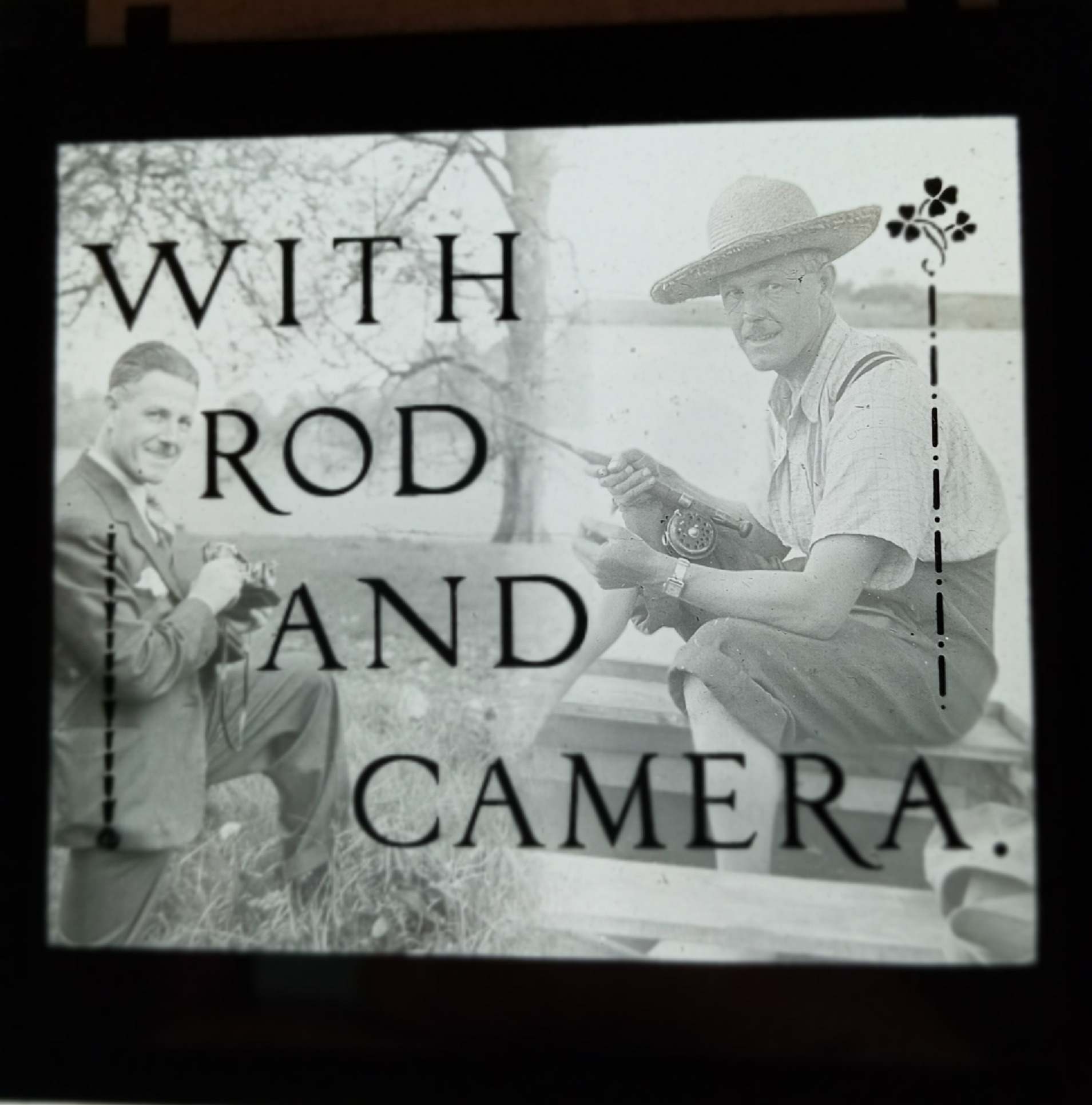
Today, we might recognise Harry as a modern-day influencer, the futurist from O’Daly Road reaching households throughout Ireland with his Radio Eireann slot ‘Camera Chats.’ He later married photography with his other passion, angling, producing a film, ‘With Rod and Camera.'
Such was Harry Braine’s output that his creations were sought by Irish Newspaper publications, the nascent Arts Council and the Department of External Affairs to showcase the newly independent Ireland that Harry had described in a lecture to his contemporaries as 'beautiful and worthy of thousands of photographs.'
From filming ‘On the lakes and rivers in Dublin, Cavan, the Midlands and the West of Ireland’ to his considered musings on the environmental impact of ESB works in Ballyshannon while ‘easting flies overs the water of the Erne,’ Harry travelled widely and captured everything such that the Drogheda Independent of 1946 credited his artistic reproductions as having made the south Louth fishing village of his beloved Clogherhead ‘famous throughout the thirty-two counties and abroad’.
Described as a ‘well-known Dublin conjuror, Mr Harry Braine’, ‘ably assisted by his talented daughter, Lily Braine,’ the showman lent his ‘amazing tricks’ to local fundraisers and entertainment when regularly holidaying with his family in the Lay Cottages of Clogherhead. And though he died suddenly in 1949 at the too young age of 54, the engineer, inventor, artist and magician from O’Daly Road left us one final trick to confound.
Sometime in the period after Harry’s death in 1949 a civil servant by the name of Maurice Curtin, double jobbing between the Department of External Affairs and moonlighting as an exhibitions officer with the Arts Council, donated hundreds of photographs to the Irish Folklore Commission. These photos are housed within the National Folklore Collection at University College Dublin which captured the rapid and fundamental cultural changes Ireland was experiencing between 1935 and 1970. These iconic photographs have been studied, reproduced, colourized and used extensively in a variety of publications for over 70 years.
“Maurice Curtin, captures the bustling vitality of urban life in 20th century Ireland. So well-timed are certain shots, that you feel as if you’ve simply walked into the frame of a moment in motion.” Reads the website of the UCD Cultural and Heritage Collection.
Maurice Curtin’s photos it can now be revealed, are in fact Harry Braine’s photos. From the well-known knife sharpener to the toy seller and the rag and bone man photographed from the garden gate of 42 O’Daly Road and the youthful image of Lily Braine quaffing Oysters in Carlingford adorning the recent tome – A History of Irish Food, Harry Braine’s work has been hidden in plain site for the last 70 years. Photographs of Drumcondra, his garages at Binns Bridge, on the site of Frank Flood Bridge, Ballyshannon, Clogherhead and beyond are all credited to Maurice Curtin. Similarly, the National Photographic Archive also contains over 150 examples of his work, credited to a former Camera Club member, Martin Maguire who donated a collection.